


Chatbots are becoming increasingly popular in therecruitment industry. They can be used to automate a variety of tasks, such asscreening candidates, scheduling interviews, and providing answers to commonquestions. This can help recruiters save time and improve their efficiency.However, there are also some drawbacks to using chatbots for recruiting. Forexample, chatbots can sometimes be difficult to understand, and they may not beable to provide the same level of personalization as a human recruiter. In thisarticle, we will discuss the benefits and drawbacks of using chatbots forrecruiting. We will also provide tips on how to choose the right chatbot foryour company and how to implement it in your recruiting process.
What are Chatbots?
Chatbots are software programs that can communicate withpeople in natural language. They are often used to provide customer service,answer questions, or schedule appointments. In recent years, chatbots havebecome increasingly popular for use in recruiting, as they can help recruitersautomate tasks, screen candidates, and provide personalized information.Chatbots can be either rule-based or AI-powered. Rule-based chatbots areprogrammed with a set of rules that they follow to respond to user queries.AI-powered chatbots, on the other hand, use artificial intelligence to learnand adapt their responses to user queries. Chatbots can offer a number ofbenefits for recruiters, including:
- Automating tasks
- Screening candidates
- Providing personalized information
- Building relationships with candidates
However, chatbots also have some drawbacks, such as:
- They can be inaccurate
- They can be biased
- They can be difficult to implement
Overall, chatbots can be a valuable tool for recruiters, butit is important to weigh the benefits and drawbacks carefully before decidingwhether to use them.
How do Chatbots Work?
Chatbots work by using artificial intelligence (AI) tounderstand and respond to human language. They are typically powered by naturallanguage processing (NLP) algorithms, which allow them to understand themeaning of human language and generate appropriate responses. Chatbots can beused to interact with users in a variety of ways, including text messaging,voice calls, and video chats. Chatbots are becoming increasingly sophisticated,and they are now able to handle a wide range of tasks, such as providingcustomer service, scheduling appointments, and providing information. They arealso being used in more and more industries, including recruiting. In thecontext of recruiting, chatbots can be used to perform a variety of tasks, suchas screening candidates, scheduling interviews, and providing answers to commonquestions. They can also be used to build relationships with candidates andcreate a more personalized experience.
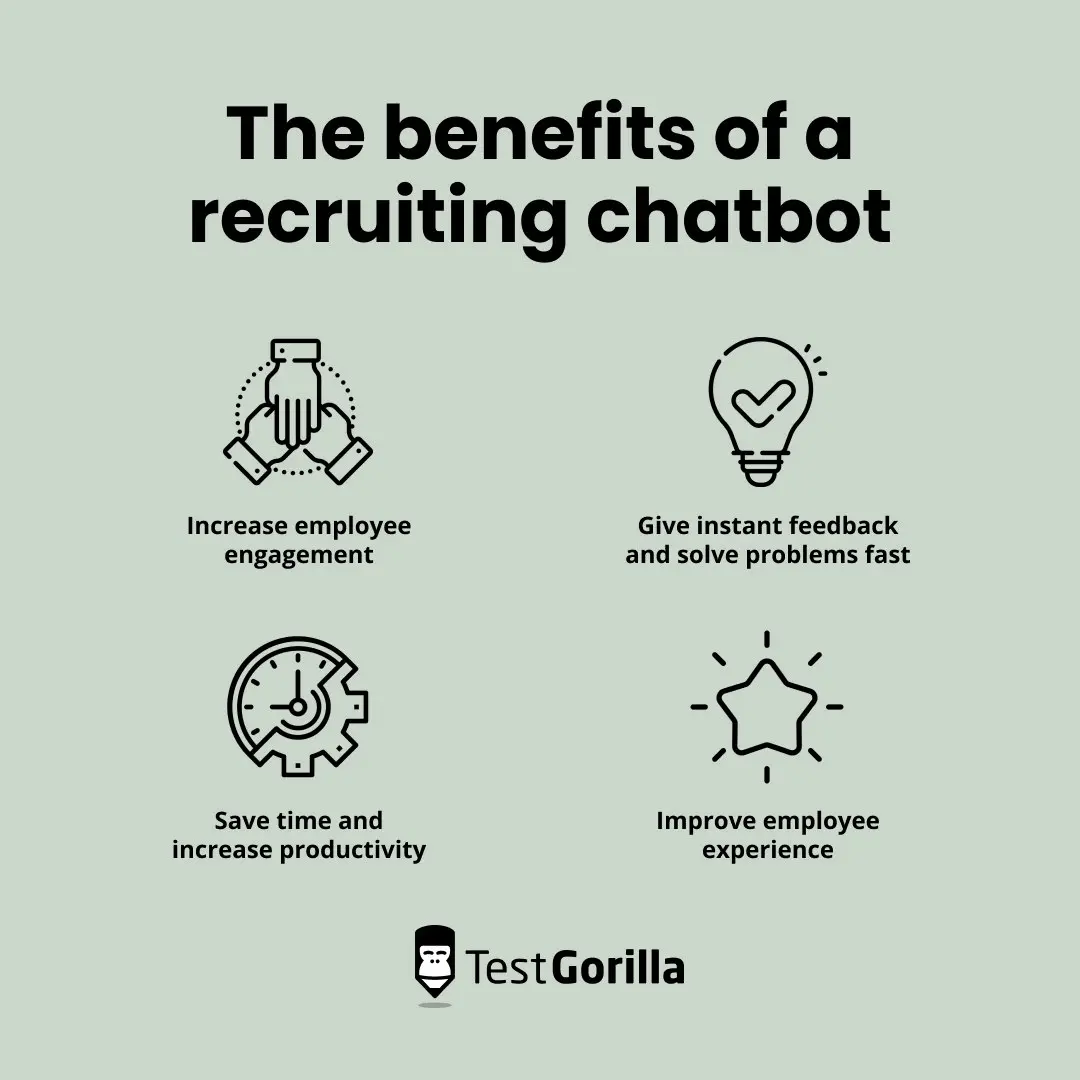
Image Source: testgorilla.com
Benefits of Using Chatbots for Recruiting
There are many benefits to using chatbots for recruiting,including:
- Automating repetitive tasks: Chatbots can help recruiters automate repetitive tasks, such as screening candidates, scheduling interviews, and answering common questions. This can free up recruiters' time so they can focus on more strategic tasks.
- Providing 24/7 support: Chatbots can provide 24/7 support to candidates, which can be helpful for candidates who are located in different time zones or who work odd hours.
- Building relationships with candidates: Chatbots can help recruiters build relationships with candidates by providing a personalized and engaging experience.
- Improving the candidate experience: Chatbots can help improve the candidate experience by providing a more efficient and streamlined process.
Drawbacks of Using Chatbots for Recruiting
There are a number of drawbacks to using chatbots forrecruiting, including:
- Chatbots can be impersonal and difficult to interact with.
- Chatbots can only answer questions that have been programmed into them.
- Chatbots can be a security risk if they are not properly implemented.
- Chatbots can be expensive to develop and maintain.
It is important to weigh the benefits and drawbacks of usingchatbots for while recruiting manpower in gulf before making a decision about whether or not to usethem.
How to Choose the Right Chatbot for Your Company
There are a number of factors to consider when choosing theright chatbot for your company. These include:
- The size of your company and the number of candidates you need to recruit
- The budget you have available
- The specific tasks you want the chatbot to perform
- The level of customer service you want to provide
- The technical skills of your team
Once you have considered these factors, you can start tonarrow down your options. There are a number of different chatbot providers onthe market, so it is important to do your research and compare differentoptions before making a decision. Here are a few things to keep in mind whencomparing chatbot providers:
- The features and capabilities of the chatbot
- The pricing of the chatbot
- The customer support offered by the chatbot provider
- The ease of use of the chatbot
By taking these factors into account, you can choose theright chatbot for your company and ensure that it meets your needs.
How to Implement a Chatbot in Your Recruiting Process
Once you have chosen the right chatbot for your company, thenext step is to implement it in your recruiting process. This process will varydepending on the specific chatbot you are using, but there are some generalsteps that you can follow. First, you will need to integrate the chatbot intoyour existing recruiting software. This may involve connecting the chatbot toyour applicant tracking system (ATS) or your CRM system. Once the chatbot isintegrated, you will need to create a profile for the chatbot and define itsrole in the recruiting process. The chatbot's role can vary depending on yourspecific needs. For example, you may use the chatbot to screen candidates,schedule interviews, or provide answers to common questions. Once you havedefined the chatbot's role, you will need to train it on the information itneeds to know. Training the chatbot can be done by providing it with a set ofdata or by having it interact with real candidates. Once the chatbot istrained, you can start using it in your recruiting process. Here are some tipsfor successfully implementing a chatbot in your recruiting process:
- Start with a small pilot program. This will allow you to test the chatbot and make sure it is working properly before you roll it out to all of your candidates.
- Provide clear instructions to candidates on how to use the chatbot.
- Monitor the chatbot's performance and make adjustments as needed.
- Use the chatbot to collect feedback from candidates. This feedback can be used to improve the chatbot and make it more effective.
By following these tips, you can successfully implement achatbot in your recruiting process and improve your ability to attract and hiretop talent.
How to Use Chatbots to Improve Your Candidate Experience
Chatbots can be used to improve the candidate experience ina number of ways. They can:
- Provide candidates with quick and easy access to information about the company and the job openings
- Screen candidates and identify the most qualified candidates for further consideration
- Schedule interviews and provide candidates with reminders
- Answer candidates' questions and resolve their concerns
- Build relationships with candidates and create a more personalized experience
By using chatbots to improve the candidate experience,recruiters can make the process more efficient and enjoyable for candidates.This can lead to a higher quality of candidates and a better chance of findingthe right person for the job.
Conclusion
Chatbots are a powerful tool that can be used to improve therecruitment process. They can help recruiters save time and improve theirefficiency, and they can also help to create a more personalized experience forcandidates. However, it is important to choose the right chatbot for yourcompany and to implement it in a way that will be effective. By following thetips in this guide, you can use chatbots to improve your recruitment processand attract top talent to your company.